
By alphacardprocess January 26, 2026
Chargebacks and fraud are ongoing challenges in the firearms industry, where strict regulations and high-risk transactions add extra pressure on merchants. A single dispute can lead to lost revenue, higher fees, and even account issues. Understanding how to handle chargebacks properly and prevent fraud before it starts is essential for protecting your business and keeping payments running smoothly.
Transaction Disputes vs Chargebacks: What Firearms Merchants Need to Know
While Transaction disputes and chargebacks are often used synonymously, they are actually quite different, especially when it comes to gun stores and firearms businesses.
A transaction dispute is merely an issue that is dealt with directly between you and your customer. It typically begins with a telephone call, an e-mail, or an in-store conversation whereby something is in question such as a charge, a policy, or a delivery and you both work it out together. These are usually situations that can be resolved quickly, with a little more flexibility, and without penalties. Many times, an explanation or slight adjustment will close the issue before it grows.
On the other hand a chargeback is much more serious. Instead of coming to you, the customer goes straight to their bank, and thus the bank pulls the money out of your merchant account while investigating the claim. Along with losing the funds while this is under investigation, you pay chargeback fees. Too many chargebacks can damage your relationship with your payment processor and even put your merchant account at risk.
The only difference is that with the transaction dispute, you still have the time and opportunity to communicate, clarify, and settle the problem, whereas the opposite prevails with the chargeback procedure, which is slow, controlled, and governed by banking and card associations.
Types of Chargeback Fraud in Gun Stores

Firstly we have friendly fraud which is when the customer disputes the charge he or she had originally approved for. In gun stores, this looks like customers complaining with claims such as “I do not recognize this charge,” or “I was not aware of this policy.” In some cases, it may also be attributed to the customer forgetting the purchase or regretting it.
Secondly we have criminal fraud which is taken more seriously and entails stolen card information. In this case, an invalid card is used for an order. As soon as the legitimate owner of this card realizes this, an unauthorized charge dispute is raised. This often occurs with Internet or phone orders, especially those without verifications.
Thirdly, another challenge that firearms businesses face is known as “return fraud.” This condition results when a customer claims not to have received the item or that the item they received has already been returned. However, the customer will still hold on to the item or the purchase.
Why Chargebacks are More Common in the Firearms Industry

There are usually more chargebacks in the firearm business than in other businesses. However, that is not necessarily because something is wrong on the merchant’s part. There are unique issues that may arise when doing firearm business, despite doing everything correctly.
Firstly one major reason is the higher value of most firearm transactions. Firearms, optics, safes, suppressors, and premium accessories usually come with larger price tags. When a transaction involves more money, customers tend to pay closer attention to their statements. A single unexpected charge or second thought can quickly turn into a dispute, especially if the customer is unsure about return policies or timelines.
The second problem is usually associated with compliance. Making purchases or owning firearms involves background checks, obtaining necessary permits, transfer approval, waiting periods, and coordinating with an intermediary with their own FFL. However, if these delays are incurred, customers get frustrated and tend to think it is the merchant’s problem, and will proceed to file a chargeback without asking why or waiting for a follow-up.
Thirdly buyer’s remorse plays a big role, too. Most cases in the firearms industry are not actually cases of fraud. Instead, they stem from instances when a customer simply regretted their purchase, or regrets buying a high-ticket item. Rather than attempting to cancel or refund the purchase via store policy, they will dispute it and classify it as being unsatisfactory.
Let’s not forget shipping issues are also a problem for businesses that sell firearms accessories, ammunition, etc. shipping issues add another layer of risk. Even when tracking shows a package was delivered, customers may still claim the item never arrived. This is especially common with high-demand or regulated products. These “item not received” claims often turn into chargebacks, despite proof of delivery.
How Firearms Businesses Can Prevent Chargebacks Before They Start
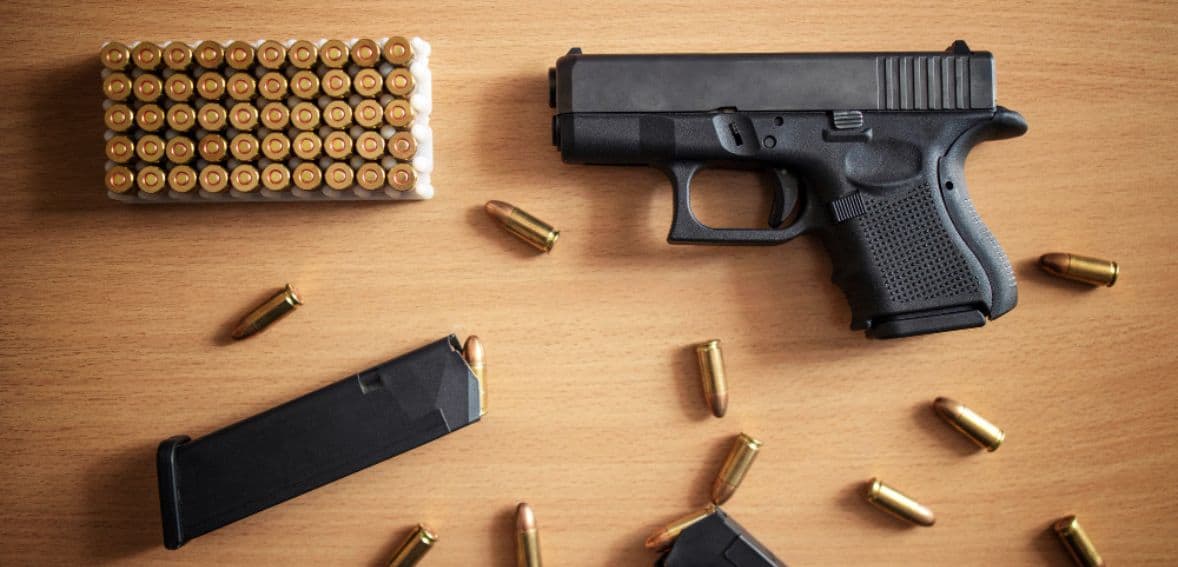
In the firearms business, the most powerful chargeback strategy available to you is prevention. Disputes are most commonly the result of a consumer’s claim of not seeing the charge on their bill, or not recognizing the charge, or not receiving the item ordered, or the refund they were promised.
Firstly one of the most effective tools in your store’s arsenal is the firearms-friendly policy acknowledgement form. Many successful gun stores require that, during every transaction, the customer signs this form. This form clearly explains important policies such as restocking fees, deposits, orders, buyer’s remorse rules, store credit terms, refunds, gunsmith or custom work, and anything to do with transfer, permitting, background checks, or anything else that slows down orders.
Chargebacks are granted or denied on evidence, which, in this case, works very much in your favour. When a customer says they were not aware of a policy, a signed and initial form shows that they were informed and agreed to it. This document becomes one of the strongest pieces of evidence in your favor.
Secondly, clear policies should also be reinforced in more than one place. Smart firearms merchants do not rely on a single disclosure. Policies should appear both on the signed acknowledgment form and printed on the receipt and should be posted clearly at the register. This reduces confusion at the time of sale and creates multiple layers of proof if a dispute comes up later.
Thirdly yet another major cause of disputes is unrecognized charges. This normally happens when the billing on the customer’s statement does not match the store name they remember. To avoid this, the statement receipt should closely resemble your public store name. Adding a phone number to the receipt when possible also helps. Your receipt should clearly show your store name, phone number, and website so customers know exactly who charged them.
Additionally address verification and CVV checking are crucial for fraud protection, especially for orders made through an online or telephone sale. Verify addresses and use higher approval limits for card-not-present transactions. If you permit these types of transactions and have multiple chargebacks, fraud protection will not be able to reverse these chargebacks.
Another thing to consider is that practices in shipping items not received are quite common in the firearms niche. Always make sure to add tracking, and in cases of valuable items, signature confirmation. Save delivery confirmations from the carrier and keep records of any shipping or delivery related communication with the customer. Failure to prove that items are delivered makes it very challenging to successfully argue the case.
How Firearms Merchants Can Successfully Handle Chargebacks

Chargebacks are a part of doing business in the firearms industry. When one comes in, the final result usually depends on three things, how quickly you respond, how strong your evidence is, and whether that evidence matches the chargeback reason. Merchants who win chargeback follow a simple but disciplined approach.
First and foremost, understand the chargeback reason code. Every dispute is assigned a reason, and that reason dictates what evidence the bank will look for. Firearms merchants most frequently deal with disputes relating to fraud/unauthorized use, goods not received, products claimed not to be as described, refund-related issues, or recurring billing cancellation. If the evidence does not align with the reason code, the bank will rule against you.
Secondly speed is just as important as accuracy. Chargebacks have strict deadlines, and one missed deadline means an automatic loss. Great merchants strive to respond within 48 hours. Moving quickly allows time to compile all the appropriate documents and submit a clean response rather than rushing at the last minute.
The quality of your submission often makes the biggest difference. To win, it has nothing to do with how you feel or what you think, and everything to do with the facts. A good submission will normally have the cover note, which describes the full situation in detail, the receipt, the invoice, proof that the customer accepted your policies, and the completion of service or delivery confirmation. Emails from the customer can usually be added for further reference, along with the issuing, if the amount was credited, for example, or the display of photographs, which are usually available from the stores, indicating the store signs and policy displays.
Costly Chargeback Mistakes that Hurt Gun Stores

There are many mistakes that gun store owners often make, but the first one lies in the misuse of the reason code.
Chargebacks have this unique feature where every single case comes with its own exclusive reason code, which ultimately dictates what kind of evidence your bank demands. Many gun store owners attempt to dispute this case but ultimately fail to win. Reason codes exist to explain why the customer is disputing the charge and what you must prove to win
The second mistake you want to avoid at all costs is the careless review of the evidence. When you submit low-quality proof, your case will not stand out well. It is advisable that gun stores review all the documents with attention and then submit the evidence to the bank. This may include receipts, policy form signups, deliveries, and customer messages. It would be beneficial if you could compile all the documents into one simple PDF format.
One other major blunder that people make includes failing to contest the chargeback. Although not all chargebacks may be worth fighting, failing to do so will definitely mean you have lost your money.
Therefore, every chargeback situation needs to be evaluated to determine if you may be able to contest and win. Although fraud chargebacks may be difficult to win, having a good representation system will increase your likelihood of success. The big thing here is that every case needs to be considered.
Next we have poor communication with customers. Most chargeback occurrences can be blamed on customer misunderstandings. Often, it’s because the customer doesn’t recognize the charge, doesn’t know anything about the merchant’s policy, or can’t find the information about the return. All of these can be brought on by poor communication on the merchant’s end. On many occasions, it’s better to refund someone than to risk the substantial cost of chargebacks. A gun shop with timely communication can avoid many chargeback complaints.
Next we have attempted to reduce costs by bypassing fraud prevention systems. Fraud prevention might appear to cost a little more upfront, but truth is, it saves your business a whole lot at the end. In the case where the business is a gun store, additional and expensive systems are not necessary, but the basics are essential. Having a good payment processor with anti-fraud tools integrated into the platform can really help your business in the long run. Using the right tools drives revenue growth and preserves your revenue stream and customers.
Another mistake is a lack of proper transaction records. For instance, when a chargeback happens, the bank may ask for proof such as receipts or other evidence. Gun stores need to have excellent records of every transaction; this way, when something comes up, you can find every detail at the snap of your fingers.
Avoiding these mistakes will help gun stores secure their revenue. Additionally, chargebacks cannot be avoided in some instances. However, handling chargebacks correctly will make a huge difference.
Conclusion
While chargeback and fraud can never totally be eliminated in the firearms industry, with the right strategy, chargeback and fraud can be effectively contained. This goes a long way in ensuring a good relation with the merchant account provider over the years. In the firearms industry, effective policies, documentation, response times, and the right fraud prevention tools are essential in the efforts to contain chargeback and fraud.
FAQs
Why do chargebacks occur frequently in the firearms industry?
Firearm transactions are considered high-risk and strictly regulated. Due to policy misunderstandings, fraud, delivery problems, and unnoticed charges, customers often initiate chargebacks.
Can gun stores win chargebacks?
Yes. Gun stores can win chargebacks by being prompt, matching the evidence to the reason code, and presenting clear proof, such as signed policies and proof of delivery.
What is the best way to prevent chargebacks?
Clear policies, signed acknowledgments, accurate billing receipt, strong fraud protection methods, and effective customer communication are measures which should be taken before disputes reach the bank.
Should all chargebacks be contested?
Not necessarily. Each chargeback may have its own situation. Fight the chargebacks with solid evidence. In some cases where evidence is low, it is better to issue refunds.
How do chargebacks impact a gun store’s merchant account?
Excessive chargeback levels may result in financial institutions charging higher fees, imposing severe regulation, or even closing accounts, making it increasingly difficult to complete transactions at gun stores.